Proprietary Discovery Process
Traditional drug development targets a single protein, which limits discovery to known pathways and often produces drugs with narrow activity and high failure rates. SENVI’s proprietary, trade secret approach targets the entire senescent cell state, a network of many proteins that drive cancer, aging, and chronic disease. By focusing on the cellular state rather than a single target, our platform uncovers mechanisms that traditional methods miss, enabling multiple first-in-class therapeutics and a pipeline that is scalable and differentiated.


Problem
Aging is an intrinsic biological process but it becomes dysfunctional when senescent cells accumulate and persist. These damaged cells disrupt normal tissue function shifting aging away from healthy adaptation toward progressive decline.

Our Solution
A non-toxic, cell-penetrable, novel peptide drug with high stability, bioavailability, and efficacy.
The SENVI Platform targets this dysfunctional aging biology. Our lead compound, SNC711, is a selective senolytic peptide designed to clear harmful senescent cells while preserving healthy tissue. By addressing this underlying biology, SENVI will support healthier aging, improved resilience, and recovery across conditions driven by cellular stress and damage.
30+
Year in
business
30+
Year in
business
30+
Year in
business
Increased Healthspan, Cancer Recovery & Chronic Disease
Preclinical data demonstrate the potential of SNC711 across increased healthspan, cancer recovery, and chronic disease.
01
Increased Healthspan
By restoring balance at the cellular level we believe we can revitalize the aged body.
Our preclinical data shows The SENVI Platform can eliminate the senescent cells that accumulate with age reducing the toxic, proinflammatory cells that disrupt tissue repair, accelerate aging, and reduce healthspan.
Interest in senolytics is growing rapidly as global leaders invest in aging biology signaling strong confidence that targeting cellular aging will shape the future of human health.
02
Cancer Recovery
We are pursuing an IND in oncology as a parallel pathway to FDA approval for use in multiple indications.
Many cancer therapies effectively control disease but leave behind damaged, senescent cells that impair tissue function and recovery. Under conditions of intense biological stress such as chemotherapy, senescent cell burden increases rapidly, accelerating biological aging and contributing to long-term organ dysfunction. The SENVI Platform can help reduce this therapy-induced senescent cell accumulation, supporting restoration of function, healthier recovery, and improved resilience.
03
Chronic Disease
Targeting cellular drivers of metabolic and chronic disease. In preclinical studies,
SNC711 removed senescent cells that perpetuate inflammation, fibrosis, and tissue decline, restoring the body’s ability to repair and rejuvenate in multiple organ systems including immune rejuvenation.
Exceptional Preclinical Safety Across Repeated Dosing
SNC711 consistently eliminated senescent cells across multiple disease models and delivery routes, including oral, topical, and systemic administration. It demonstrated enhanced tumor clearance with targeted therapies, reversal of aging phenotypes, immune restoration, and no observable toxicity, even after repeated high-dose treatment.
To date, SNC711 has been evaluated in 247 mice across more than 1,500 treatments and counting, with over 20 oral doses and 6 intraperitoneal (IP) injections per animal.
No treatment-related toxicity has been observed, supporting SNC711's broad potential across oncology, aging, and chronic disease.
Precision senolytics designed to work as a combination therapy with cancer treatments
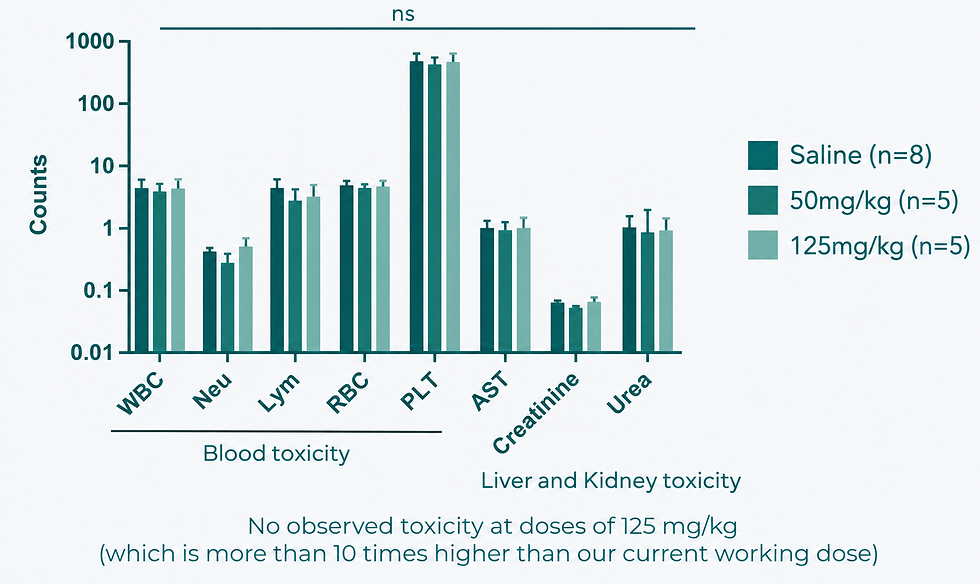
SNC711 results in no increased mutational signature

Reduction in Senescent Cell Burden in Aged Mice
SNC711 consistently eliminated senescent cells across multiple preclinical models, delivery routes, and tissues. In aged mice, systemic treatment reduced the senescent cell burden by up to 90%, demonstrating potent senolytic activity in aged mice.
Beyond clearing senescent cells, SNC711 restored biomarkers associated with healthy aging and improved the expression of proteins linked to agerelated decline. These findings support SNC711's potential as a broad therapeutic platform for aging and age-related diseases.
Reducing senescent burden in aged mice treated with SNC711

SNC711 Reverses Age-Associated Protein Expression

SNC711 Shows Reversal of Aging Phenotype in Treated Mice
Reversal of aging phenotypes in mice treated systemically with SNC711

Treated with SNC711 systemically Image is from 7 days post treatment of a single dose

Reversal of Obesity and MuscleWasting
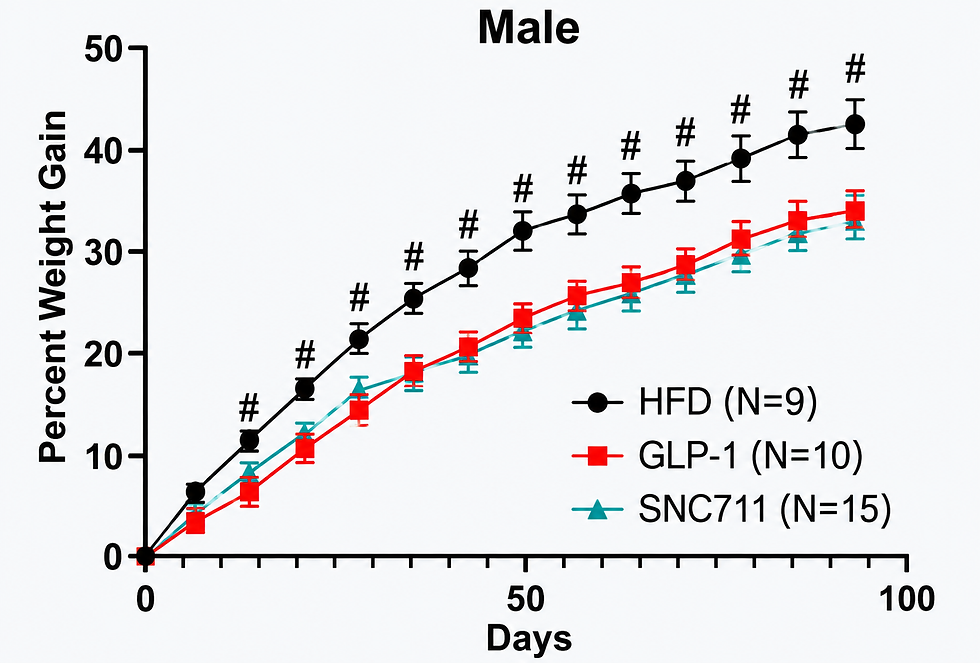
This data suggests that SNC711 is working through a different mechanism than GLP-1 therapies, which primarily drive weight loss through reduced food intake and are often associated with lean muscle loss. SNC711 has demonstrated comparable metabolic benefits while preserving and improving muscle function.
As a result, SNC711 represents a novel approach to metabolic disease with the potential to function better than GLP-1 therapies by addressing the underlying senescence-driven pathology. SNC711 works by unlocking the bodies own potential, not just treating the problem.
The Study: High-fat Western diet model of metabolic disease and cancer. SNC711 administered orally at 10 mg/kg weekly, starting one month after diet initiation. Rotarod and grip test performed 8-10 weeks into study
20% reduction in weight gain after 13 weekly oral doses comparable to weight loss seen with GLP-1s (Wygovy)
GLP-1 treated mice have reduced muscle strength and coordination whereas SNC711 mice show increased muscle control

Senvi’s Potential for Safer and More Effective Cancer Treatment
SNC711 has demonstrated compelling anti-tumor activity across multiple preclinical oncology models. By selectively eliminating senescent cells and restoring anti-tumor immune function, SNC711 has enhanced the efficacy of targeted therapies and produced durable tumor responses.
The study: This is a skin cancer mouse model that randomly developed melanoma. The mice are treated orally with SNC711 and targeted chemotherapy delivered directly to the tumor weekly for 18 weeks. Then both drugs were stopped and tumor progression monitored.
Combination treatment of SNC711 plus targeted therapy results robust and sustained tumor regression, even after going off treatment
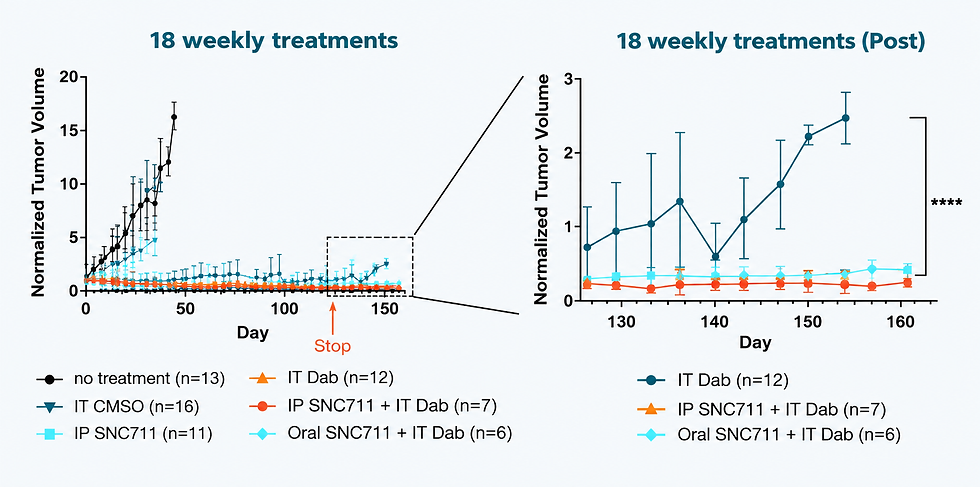
Tumor regression in as little as 7 days.

SNC711 Unlocks New Mechanisms to Eliminate Cancers
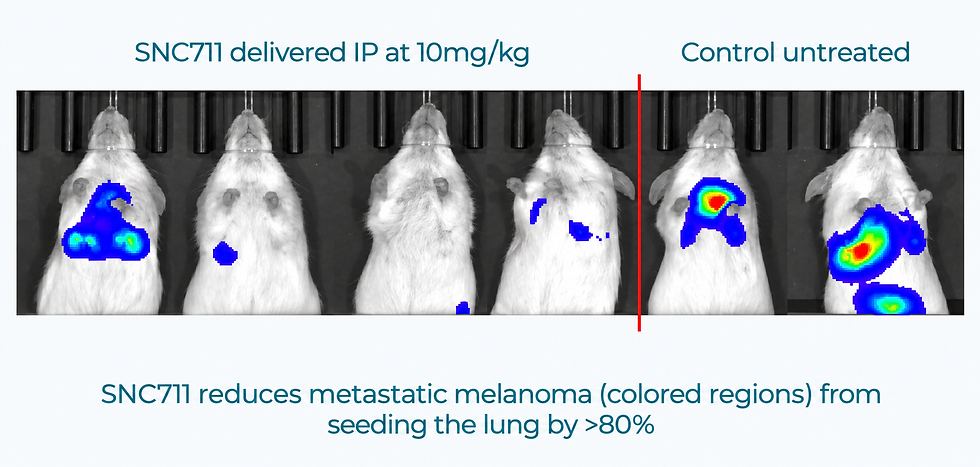
SNC711 has shown multiple roles in preventing cancer. First SNC711 improves access of anti-tumor immune cells in tissue normally considered immune cold. Second SNC711 prevents the metastatic cancer cells from seeding in new locations. These findings demonstrated that senescent cell clearance can improve the body's ability to fight cancer and slow recurrence.
The study: Top: Pancreatic cancer model (KPC) given SNC711 orally and stained for cytotoxic T-cells (CD8) Bottom: Human melanoma cells injected intravenous (experimental metastases) and SNC711 given systemically a few hours later. Cells contain luciferase (blue to red color) for longitudinal imaging.
Increased cytotoxic T-cells within the tumor environment after treatment with SNC711

Prevention of metastatic cells to seed the foreign tissue